Bleeding into the skin
A black eye is caused by bleeding into the tissue around the eye. This most often follows trauma. The medical term for this type of bruising is ecchymosis.
Also known as: Ecchymoses, Skin spots - red, Pinpoint red spots on the skin or Petechiae
- Injury or trauma
- Allergic reaction
- Autoimmune disorders
- Viral infection or illness affecting blood coagulation
- Thrombocytopenia
- Medical treatment, including radiation and chemotherapy
- Antiplatelet medications such as clopidogrel (Plavix)
- Bruise (ecchymosis)
- Birth (petechiae in the newborn)
- Aging skin (ecchymosis)
- Idiopathic thrombocytopenic purpura (petechiae and purpura)
- Henoch-Schonlein purpura (purpura)
- Leukemia (purpura and ecchymosis)
- Drugs
- Anticoagulants such as warfarin or heparin (ecchymosis)
- Aspirin (ecchymosis)
- Steroids (ecchymosis)
- Septicemia (petechiae, purpura, ecchymosis)
- You have sudden bleeding into the skin for no apparent reason
- You notice unexplained bruising that does not go away
- Have you recently had an injury or accident?
- Have you been ill lately?
- Have you had radiation therapy or chemotherapy?
- What other medical treatments have you had?
- Do you take aspirin more than once a week?
- Do you take Coumadin, heparin, or other "blood thinners" (anticoagulants)?
- Has the bleeding occurred repeatedly?
- Have you always had a tendency to bleed into the skin?
- Did the bleeding start in infancy (for example, with circumcision)?
- Did it start with surgery or when you had a tooth pulled?
- Coagulation tests including INR and prothrombin time
- CBC with platelet count and blood differential
- Bone marrow biopsy
Definition
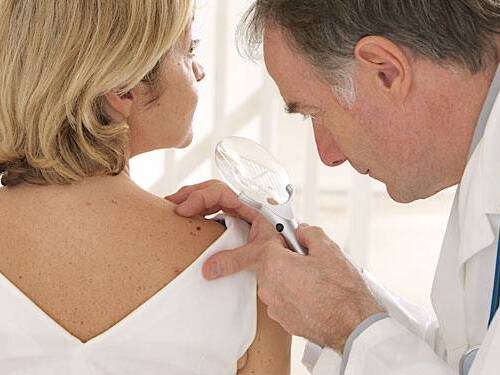
Bleeding under the skin can occur from broken blood vessels that form tiny pinpoint red dots (called petechiae). Blood also can collect under the tissue in larger flat areas (called purpura), or in a very large bruised area (called an ecchymosis).
Considerations
Aside from the common bruise, bleeding into the skin or mucous membranes is a very significant sign and should always be checked out. Redness of the skin (erythema) should not be mistaken for bleeding. Petechiae, purpura, and ecchymosis do not become pale (blanch) with pressure. The redness of erythema decreases and then returns when you apply and then release pressure to it.
Common Causes
Home Care
Protect aging skin. Avoid trauma such as bumping or pulling on skin areas. For a cut or scrape, use direct pressure to stop the bleeding.
If you have a drug reaction, ask your health care provider about stopping the drug. Otherwise, follow your prescribed therapy to treat the underlying cause of the problem.
Call your health care provider if
Contact your health care provider if:
What to expect at your health care provider's office
Your doctor will examine you and ask questions about the bleeding, such as:
The following diagnostic tests may be performed:
References
Schafer AI. Approach to the patient with bleeding and thrombosis. In: Goldman L, Ausiello D, eds. Cecil Medicine. 23rd ed. Philadelphia, Pa: Saunders Elsevier; 2007:chap 178.
- Review date:
- May 2, 2009
- Reviewed by:
- Linda J. Vorvick, MD, Medical Director, MEDEX Northwest Division of Physician Assistant Studies, University of Washington, School of Medicine. Also reviewed by David Zieve, MD, MHA, Medical Director, A.D.A.M., Inc.
Copyright Information
A.D.A.M., Inc. is accredited by URAC, also known as the American Accreditation HealthCare Commission (www.urac.org). URAC's accreditation program is an independent audit to verify that A.D.A.M. follows rigorous standards of quality and accountability. A.D.A.M. is among the first to achieve this important distinction for online health information and services. Learn more about A.D.A.M.'s editorial policy, editorial process and privacy policy. A.D.A.M. is also a founding member of Hi-Ethics and subscribes to the principles of the Health on the Net Foundation (www.hon.ch).The information provided herein should not be used during any medical emergency or for the diagnosis or treatment of any medical condition. A licensed medical professional should be consulted for diagnosis and treatment of any and all medical conditions. Call 911 for all medical emergencies. Links to other sites are provided for information only -- they do not constitute endorsements of those other sites. © 1997- 2008 A.D.A.M., Inc. Any duplication or distribution of the information contained herein is strictly prohibited.