What Is Color Blindness (Color Vision Deficiency)?
Learn the symptoms, causes and testing for color blindness
Learn the symptoms, causes and testing for color blindness
Key Takeaways
- Color blindness makes some colors hard to tell apart
- Red-green color blindness is the most common type.
- It’s usually inherited and more common in men.
- Eye doctors diagnose it with color vision tests.
Imagine trying to read a color-coded chart or choosing between clothing colors and realizing the shades look almost identical.
Color blindness, medically known as color vision deficiency, affects how the eyes perceive certain colors.
While many people think color blindness means seeing only black and white, most people with the condition can still see color. They simply perceive some colors differently.
How does reduced color vision affect your life?
Reduced color vision is generally not considered to be a disabling condition. However, the impact can vary depending on how much color perception is affected.
“Deficits in color vision can range from mild to severe,” says Ray Gariano, MD, an ophthalmologist at Scripps Clinic Rancho Bernardo and Scripps Clinic Torrey Pines.
Many people with color vision deficiency can still see a wide range of colors but not always in the same way as others.
“People with reduced color vision may be able to see many colors but they may see them differently than most people. The differences often are so subtle that the condition can go undetected,” he says.
However, reduced sensitivity to certain colors can interfere with activities, such as driving, shopping or reading a computer screen. Children may have difficulty in school if their teachers are not aware of the problem.
Color blindness symptoms
Symptoms vary depending on the type and severity of the condition. Many people have mild color vision deficiency and may not realize it.
Common symptoms include:
- Difficulty distinguishing between red and green
- Trouble telling blue from green or yellow from gray or purple
- Seeing certain colors as duller or less bright than usual
- Difficulty reading color-coded charts, maps or graphs
- Trouble matching clothing colors
- Mistaking one color for another, especially in traffic lights or signals
What causes color blindness?
Reduced color vision occurs when photopigments in the cone cells of the retina do not work properly. The retina converts light into signals the brain interprets as images.
Most people have three types of cone cells that respond to red, green and blue light. The balance of signals from these cones determines how we perceive color. Color vision problems develop when one or more cone types are missing or do not work properly.
Types of color blindness
Color vision deficiency is grouped by the cone cells affected.
Red-green color blindness
This is the most common type of color vision deficiency and affects how the eye detects red or green light. People may:
- Confuse red and green
- Have trouble distinguishing brown, orange or yellow
- See reds as darker than usual
The way color blindness affects vision can vary depending on the type of color vision deficiency, Dr. Gariano says.
“Most people affected by this condition can see colors, but certain colors can be confused for others and create problems of varying degrees,” Dr. Gariano says. “It all depends on the type of color vision deficiency that they have.”
Blue-yellow color blindness
This type is less common and affects how people perceive blue and yellow hues.
People may have difficulty distinguishing:
- Blue from green
- Yellow from gray or purple
- Subtle shades of blue
Complete color blindness
In rare cases, people see only shades of black, white and gray.
This condition, called achromatopsia, is often linked with other vision problems, including severe sensitivity to light, blurred vision and reduced visual acuity.
Another rare inherited condition is blue cone monochromacy, in which red and green cone cells do not function properly and vision relies mainly on blue cone cells. This significantly affects color perception and visual clarity.
How common is color blindness?
Most cases are inherited and present at birth. Genes responsible for red-green color vision are carried on the X chromosomes, which is why the condition is more common in men.
About one in 12 men and one in 200 women have some form of color vision deficiency, according to national studies.
Color vision problems can also develop later in life due to eye or nerve conditions. This is known as acquired color blindness.
“In some cases, color vision deficiency is caused by other factors not related to genetics, including aging, injuries to the eye and eye problems, such as cataracts, glaucoma, optic nerve disorders or macular and retinal degenerations,” Dr. Gariano says.
Some medications can interfere with color perception, he adds.
How is color blindness diagnosed or tested?
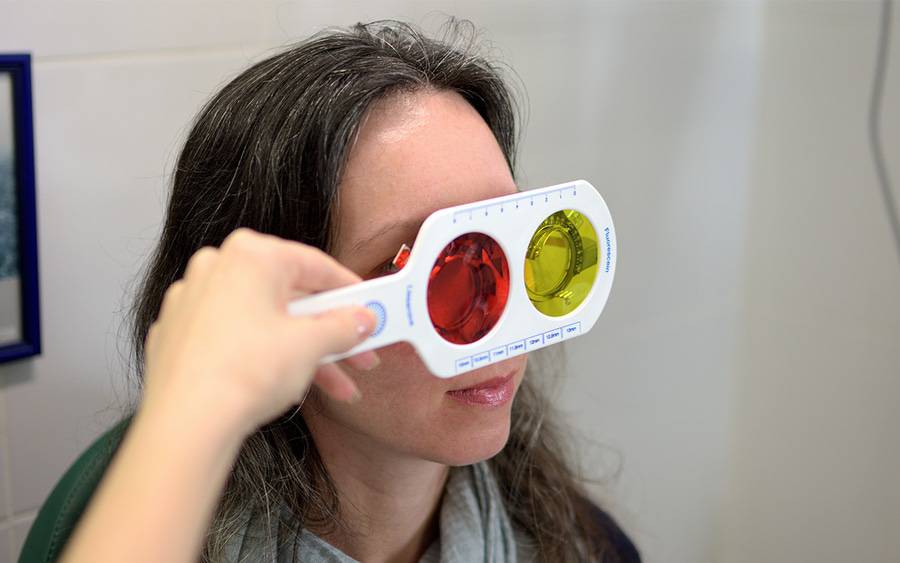
An ophthalmologist or optometrist can diagnose color vision deficiency using specialized tests that measure how well a person distinguishes colors.
The most common test is the Ishihara color test. In this test, a person looks at plates made of many colored dots that form a pattern, such as a letter, number or shape. Depending on which patterns the person can see or cannot see, a doctor can determine whether they have color blindness.
Another type of test may ask the person to arrange colored chips or tiles into groups based on similar colors.
Vision screening
Color vision testing may be part of a comprehensive eye exam. In some cases, it may also be included in a child’s vision screening.
Children are often first screened at school or during pediatric eye exams. Early detection can help teachers adjust learning materials and prevent unnecessary frustration in the classroom.
Is there treatment for color blindness?
While there is currently no treatment available for inherited color blindness gene therapies are being tested in human clinical trials, Dr. Gariano notes.
Also, acquired cases may improve if the underlying condition is treated. Special color filtering glasses may help improve contrast between certain colors but they do not restore normal color vision.
Most people can easily compensate by using other visual cues, such as where an object is located or which colors surround it. These tools do not restore normal color vision but can improve color recognition in some situations.
Why regular eye exams matter
Although inherited color blindness cannot be prevented, regular eye exams help protect overall eye health.
Comprehensive exams can detect conditions that may affect color vision, including:
- Cataracts
- Glaucoma
- Macular degeneration
- Retinal disease
- Optic nerve disorders
Eye exams are especially important for:
- Children starting school
- Adults over age 40
- People with diabetes or high blood pressure
When to see an eye doctor
Schedule an eye exam if you notice:
- Sudden changes in color vision
- Trouble telling colors apart
- Blurred vision
- Increased sensitivity to light
An eye doctor can determine whether symptoms are caused by color blindness or another eye condition.