Head and Neck Cancer Treatment: Advanced Care at Scripps
Robotic surgery and team-based care help improve outcomes
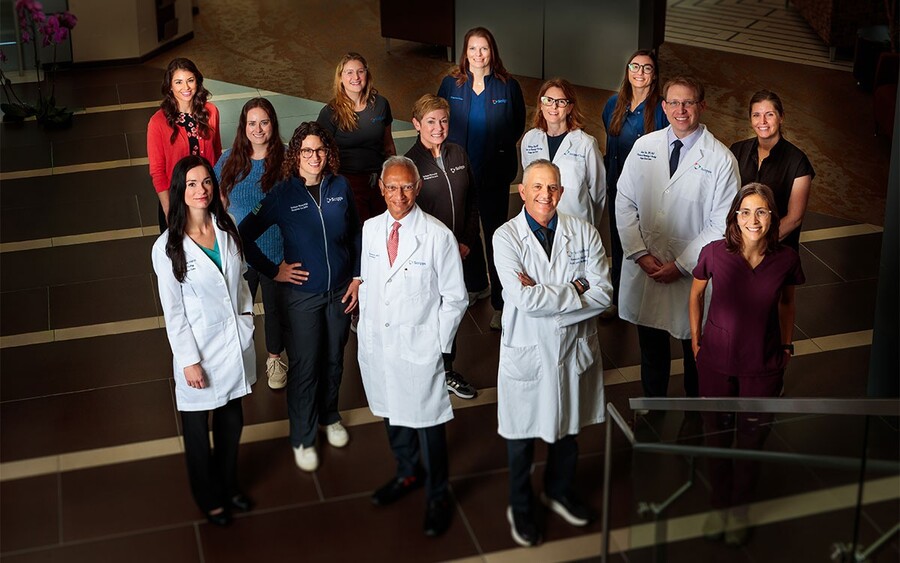
Robotic surgery and team-based care help improve outcomes
Key Takeaways
- Scripps offers advanced head and neck cancer treatment in San Diego.
- Specialists work together to develop personalized treatment plans.
- Robotic surgery may offer faster recovery for eligible patients.
- Reconstructive surgery helps restore speaking, swallowing and eating.
Head and neck cancer can disrupt some of life's most basic activities, from enjoying a meal to speaking with loved ones.
At Scripps Cancer Center in San Diego, specialists provide advanced, personalized treatment that fights cancer while helping patients preserve vital functions and quality of life.
Patients have access to advanced head and neck cancer care at locations throughout San Diego County, including Prebys Cancer Center at Scripps Mercy Hospital San Diego and Scripps Cancer Center, John J. Hopkins Drive.
Head and neck cancer treatment in San Diego
Head and neck cancer treatment at Scripps brings together specialists in:
- Surgery
- Medical oncology
- Radiation oncology
- Reconstructive surgery
- Speech-language pathology
Central to this approach is the head and neck oncology tumor board, where specialists meet weekly to review complex cases, discuss the latest research and recommend treatment plans.
Brendan Gaylis, MD, an otolaryngologist at Scripps Clinic and director of head and neck oncology at Scripps Cancer Center, chairs the tumor board. He says this team-based approach gives patients access to a broad range of advanced treatment options.
“Scripps Health physicians are able to perform a full range of surgical procedures, in conjunction with advanced radiation therapy, chemotherapy and immunotherapy,” Dr. Gaylis says. “Our program is on par with any academic program in the country in terms of the quality of care that we’re providing.”
Beyond advanced treatments, care is tailored to each patient’s needs and goals, says Perry Mansfield, MD, an otolaryngologist who specializes in skull base and head and neck surgery at Prebys Cancer Center.
“What we offer is a collaboration of expertise that is unique,” he says. “Our focus is on patient-centered, patient-specific, personalized care, and we offer the best treatments for the best outcome. This holistic approach ensures patients always get the best care, regardless of which physician is treating them.”
What treatments are available for head and neck cancer?
Treatment depends on the cancer’s type, location and stage as well as the patient’s overall health. Options may include:
- Surgery: Removes cancerous tumors, sometimes using minimally invasive robotic techniques.
- Radiation therapy: Uses targeted radiation to destroy cancer cells while limiting exposure to surrounding healthy tissue.
- Chemotherapy: Uses medications to kill cancer cells and may be combined with radiation therapy.
- Immunotherapy: Helps the immune system recognize and attack cancer cells.
- Reconstructive surgery: Helps restore appearance and essential functions after cancer treatment.
Minimally invasive robotic surgery for head and neck cancer
With philanthropic support, Scripps is expanding access to advanced surgical technology, including minimally invasive robotic procedures for eligible patients with head and neck cancer.
Transoral robotic surgery (TORS) allows surgeons to remove certain tumors from the tonsils and base of the tongue through the mouth, without external incisions. Compared with traditional open surgery, TORS may result in less pain, a shorter hospital stay and faster recovery. Kevin Brumund, MD, a head and neck surgical oncologist at Prebys Cancer Center who joined Scripps earlier this year, specializes in TORS.
The procedure may be an option for some patients with throat cancers linked to human papillomavirus (HPV). Whether a patient qualifies depends on the tumor's size, location and stage, as well as the patient's overall health.
“Tonsil cancer is unfortunately one of the most rapidly rising cancers in our culture currently, and we’re one of the few centers that have the expertise to do this,” Dr. Mansfield says.
“The standard of care has shifted significantly in the last decade, and we believe that there isn’t a patient who has tonsil cancer that should not be referred to a TORS surgeon. That’s why this collaboration is so important,” he says.
Reconstructive surgery to restore function
Reconstructive surgery helps patients regain functions such as speaking, swallowing and eating while improving their appearance and quality of life.
CT scans and computer-assisted planning help surgeons prepare for complex reconstructive procedures with greater precision.
Ravi Garg, MD, a plastic and reconstructive surgeon at Prebys Cancer Center who specializes in vascularized tissue transplantation, helps restore appearance and function after head and neck cancer surgery.
“We’re trying to restore what’s missing using the patient’s own tissue. The recovery is intensive, but patients generally do very well and regain function and go on to live meaningful lives,” says Dr. Garg.
“A diagnosis of head or neck cancer is a lot to process, and our multidisciplinary team is here to support the patient through their entire journey,” he says.
Advancing the future of head and neck cancer care
Scripps is helping train the next generation of cancer specialists through its graduate medical education programs, including the Scripps Clinic/Scripps Green Hematology and Oncology Fellowship Program.
Fellows gain hands-on experience caring for patients with cancer, including head and neck cancers, alongside specialists at Scripps Green Hospital and Scripps Mercy Hospital.
Together with philanthropic support for advanced treatments, these efforts help Scripps strengthen cancer care for patients today and in the future.

This content appeared in San Diego Health, a publication in partnership between Scripps and San Diego Magazine that celebrates the healthy spirit of San Diego.